
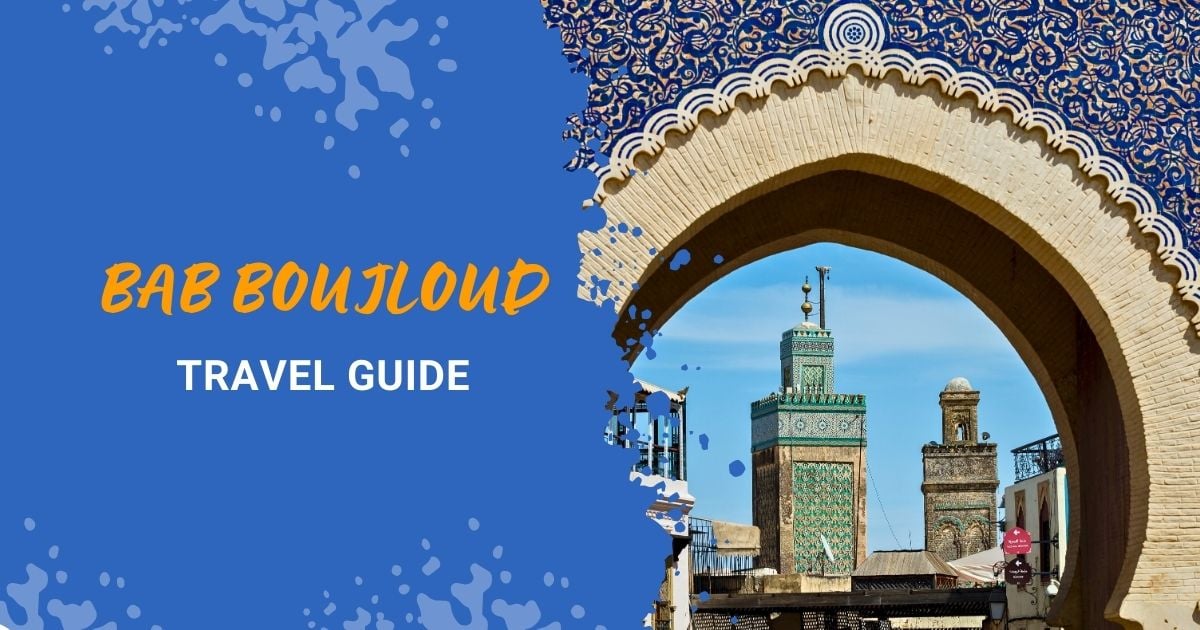
Bab Boujloud, the Blue Gate of Fes, serves as the main entry point into Fes el-Bali, the city’s oldest district. Around the gate, you’ll find constant activity from local shops, street vendors, and people moving through the medina.
The gate features blue tiles on the outer facade and green tiles on the inner side, each reflecting the city’s culture and heritage. As you step through, the sounds, smells, and narrow streets of the medina begin to unfold, giving you a first glimpse of what makes this part of Fes so unique.
In this guide, we’ll explore the history, significance, and things to do when visiting Bab Boujloud, as well as how it ties to the wider story of Fes.
Bab Boujloud Historical Overview
Bab Boujloud isn’t just a gateway; it’s a marker of Fes’ evolution, standing at the crossroads between centuries-old tradition and early modern urban design.
Origins & Old Gate (12th Century)
The earliest version of Bab Boujloud was a fortified medieval gate made around the 12th century. The gate was built to regulate entry into the core of Fes. Its bent-passage layout forced visitors to slow down as they entered, serving both as a defensive feature and a way to manage movement into the medina.
Positioned between key caravan roads, markets, and early neighborhoods, the gate served as a practical checkpoint for goods, traders, and residents entering the city.
Modern Gate (1913)
The Bab Boujloud you see today dates back to 1913, when the French Protectorate redesigned the entrance to make it wider, brighter, and more inviting. Within a short time, the new gate became a recognizable emblem of Fes, a welcoming frame that leads straight into the medina’s lively rhythms.
The modern structure embraced Moroccan artistic tradition, blending local craftsmanship with early 20th-century urban planning.
Symbolism & Architecture
The gate’s signature colors and architecture carry deep meaning:
- Blue tiles (outer side): The blue zellij tiles on the exterior highlight Fes’s long tradition of ceramic craftsmanship, which has been active since the city’s early dynasties. In Moroccan symbolism, blue represents protection, peace, and spirituality, making it a fitting color for a gate that welcomes visitors into the medina.
The geometric patterns on the tiles follow traditional Islamic design principles, using repeating shapes to express harmony and the infinite nature of creation.
- Green tiles (inner side): The green tiles on the inner side symbolize Islam and the old city’s spiritual character. Historically, students and scholars passing through this direction would head toward key institutions like the University of Al Quaraouiyine.
- Architectural elements: Bab Boujloud’s structure includes three horseshoe arches, a layout that was designed for traffic control rather than decoration alone.
- Central Arch: Built wider to allow horses, pack animals, and later heavier public traffic to pass.
- Side Arches: These smaller arches historically separated pedestrian movement from animals and goods.

Things to Do Near Bab Boujloud
Bab Boujloud is close to many historical and cultural attractions of Morocco that you can explore while visiting the historic gate.
Explore Al-Attarine Madrasa & University of Al Quaraouiyine
Opening Hours:
- Al-Attarine Madrasa: 9:00 AM – 5:00 PM
- University of Al Quaraouiyine: 9:00 AM – 4:00 PM
Al-Attarine Madrasa and the University of Al Quaraouiyine are two of the most important centers of Islamic learning in Fes. Visiting them gives you a sense of the city’s long history of scholarship, while the detailed architecture and decorations show the skill and creativity of Moroccan craftsmen.
Highlights:
- Golden stucco details show the precision of Marinid-era workmanship.
- Intricate zellij tilework follows classic Moroccan geometric rules.
- Academic heritage reflects the medina’s long role as a center for Islamic learning, with Al-Qarawiyyin often cited as one of the world’s oldest continually operating universities.
Note: Some inner areas, especially within religious spaces, may be restricted to non-Muslims.
Experience the Souks Starting at Bab Boujloud
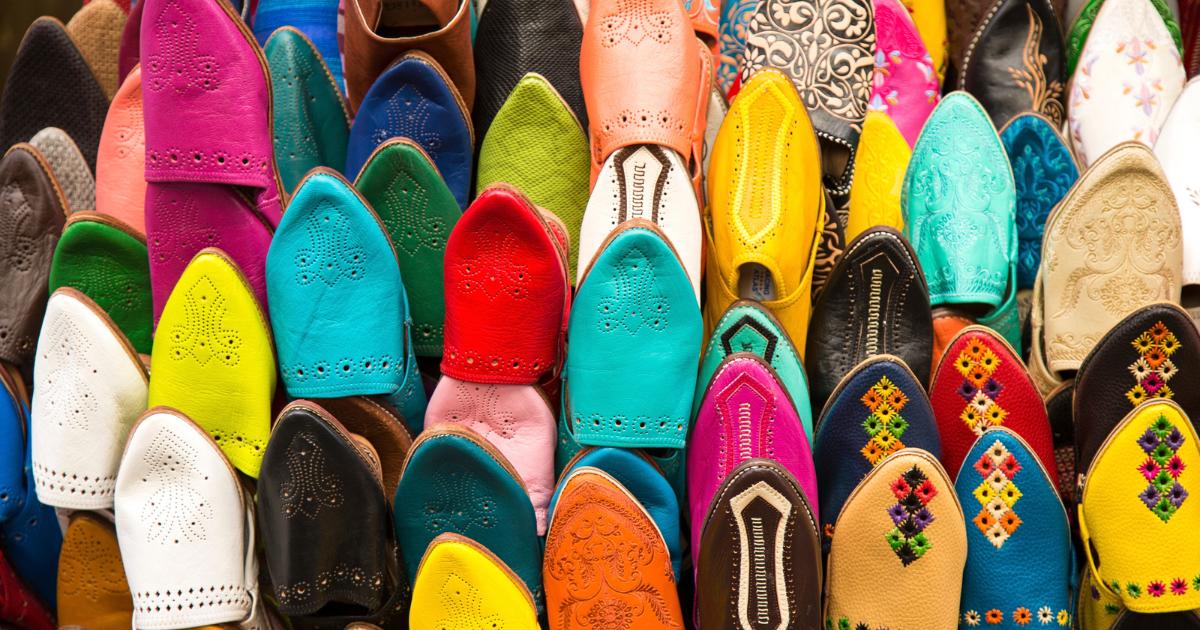
As soon as you enter through the Blue Gate, you’ll find yourself in the middle of busy souks. The shops, food stalls, and workshops give you an easy first look at daily life in the medina, and it’s a good spot to wander around and pick up local handmade items.
Highlights:
- Handcrafted leather slippers showcase traditional Fassi workmanship.
- Soft scarves dyed in natural tones.
- Metal lanterns carved with geometric patterns; a common Moroccan home decor.
- Aromatic spice stalls filled with saffron, cumin, ras el hanout, and so on.
- Colorful ceramics inspired by Fes’ famous pottery traditions.
Tip: Visit in the morning when vendors are setting up, and the atmosphere is calmer.
Enjoy Rooftop Cafes & Moroccan Cuisine
The rooftop terraces around Bab Boujloud offer some of the best open-air dining spots in the medina, giving you a chance to enjoy the city from above.
Highlights:
- Fresh mint tea served with a view.
- Slow-cooked lamb tagine infused with spices and dried fruits.
- Crispy chicken pastilla combines sweet and savory notes.
- Sunset views across the medina’s rooftops and minarets.
Tip: Popular terraces fill quickly at golden hour, so it’s smart to reserve a table in advance.
Try Street Food Near the Gate
The food stalls near Bab Boujloud offer an easy, delicious introduction to local flavors without the need for a full sit-down meal.
Highlights:
- Warming bowls of snail soup seasoned with herbs and loved by locals.
- Freshly made msemen griddled to perfection.
- Juicy brochettes grilled over open flames.
- Bowls of marinated olives offer salty, tangy flavors unique to Morocco.
- Fresh fruit juices are blended on the spot for a refreshing treat.
Tip: Busy stalls with a constant flow of customers usually mean fresher ingredients and better hygiene.
Join a Medina Walking Tour Starting at Bab Boujloud
Most licensed guides begin their tours at Bab Boujloud, making it the ideal starting point for learning about the medina’s culture, history, and hidden corners. A guided walk helps you navigate areas that can feel overwhelming on your own.
Highlights:
- Visits to traditional tanneries where leather is processed using age-old techniques.
- Stops at historic mosques that reveal centuries of spiritual and architectural history.
- Encounters with artisan workshops where metalworkers, weavers, and woodcarvers craft by hand.
- Walks through narrow medieval streets that unveil hidden corners of Fes el-Bali.
Tip: Always choose a certified guide to ensure accurate information and avoid common tourist scams that happen around the gate.
Relax in Jnan Sbil Gardens (Boujloud Gardens)
Just a short 10-minute walk from the Blue Gate, Jnan Sbil offers a peaceful break with lush greenery, fountains, and shaded paths.
Highlights:
- Long palm avenues; ideal for an afternoon stroll.
- Peaceful lakes reflecting trees and sky; perfect for photography.
- Towering bamboo clusters create a cool, calming atmosphere.
- Andalusian-inspired landscaping blends fountains, flowers, and symmetrical designs.
Tip: Arrive near sunset when the temperature cools, and the gardens become a social spot for families and evening walkers.
Visit the Merenid Tombs (Optional Extension)
A short hike or taxi ride takes you to these hilltop ruins, offering one of the best panoramic viewpoints over Fes. The hilltop setting is dramatic, especially in late-afternoon light when the entire medina glows below you.
Highlights:
- Wide, open sunset views stretching across the entire Fes medina.
- A panoramic skyline that reveals how the city includes both hills and valleys.
- Ancient ruins that offer a glimpse into the legacy of the Merenid dynasty.
Tip: It can get windy and cooler at the top, so bring a light jacket and wear comfortable shoes if you plan to walk up.
Spiritual & Cultural Layers: Discovering Fes Beyond the Surface
Walking through Bab Boujloud means stepping into layers of history, faith, and tradition that have shaped Fes for centuries. Beyond the vibrant markets and busy streets, the medina is filled with spiritual landmarks, from centuries-old mosques to madrasa courtyards.
Many of the narrow streets were designed around religious institutions and learning centers, which is why you’ll find study halls, prayer areas, and artisan quarters close together.
As you explore, you’ll see how education, craftsmanship, and faith are closely connected in the medina’s layout. Paying attention to these details helps visitors understand how Fes developed and why it remains one of Morocco’s most important cultural cities.

Tips for Visiting Bab Boujloud
Here are a few quick tips to help you make the most of your visit.
Best Time to Visit
Before you get out of your hotel room, here’s when this place feels its most charming:
- Early morning is perfect if you want quiet streets, soft light, and clear photos without crowds.
- Late afternoon adds warm golden tones and a lively atmosphere as locals and visitors fill the area.
- Nighttime is ideal for seeing the gate beautifully illuminated, giving it a dramatic blue glow.
Best Time for Photos (Lighting + Crowds)
If you want good photos, timing matters a lot at Bab Boujloud:
- Morning (≈ 8–10 AM): The soft daylight highlights the blue facade beautifully before the medina gets busy. Great for wide-angle and crowd-free shots.
- Late afternoon / golden hour: As the sun dips, the green interior tiles take on a richer tone, and the warm light adds atmosphere to the alleys just beyond the gate.
- Night: The gate is usually lit up after sunset, giving a dramatic contrast to the blue and green tiles. Great for low-light or silhouette photography.
Navigation Tips
Here’s how to move around the gate and nearby medina with ease:
- Use Bab Boujloud as your main orientation point. It’s one of the easiest landmarks to return to when exploring the medina.
- Follow the signs for Tala’a Kebira and Tala’a Seghira, the two main streets branching from the gate.
- If it’s your first trip to Fes, hiring a certified guide can make navigation far easier.
Safety Tips
Here are a few simple pointers to keep your visit stress-free:
- Keep your belongings close, especially when walking through busy souks where crowds can get tight.
- Wear comfortable shoes; the medina’s alleys are uneven, narrow, and often uphill.
- Dressing modestly respects both local customs and makes you feel more comfortable in traditional areas.
Smart Shopping Tips
Here are a few practical, street‑smart tips:
- Treat bargaining as a friendly exchange.
- Look beyond the busiest stalls for real value.
- Bring a sturdy bag or keep empty space in your luggage.
- Ask for origin and quality, not just price, to know what you are buying.
- Carry a small amount of local cash.

Getting to Bab Bojloud
Here’s the easiest way to reach Bab Boujloud from different parts of Fes through different means of transport:
- Nearest airport: The closest airport is Fes-Saiss Airport (FEZ), about 16-17 km from the gate, usually a 20-25 minute drive.
- Taxi vs Petit-taxi: From the airport or train station, taking a regular taxi (or petit-taxi) is common. Recent fares for a standard taxi to Bab Boujloud are often in the MAD 95–120 range, but prices can change—confirm the rate before you get in.
- Car: You can reach the perimeter near the gate by driving a car.
- Accommodation: Many riads and nearby hotels, including Bab Boujloud Hotel and Jawharat Bab Boujloud, are within easy walking distance.
- From the train station: A taxi ride from Fes train station to Bab Boujloud usually costs somewhere around MAD 10–30 with the meter; fixed hotel transfers may charge more.
The Stories That Begin at the Blue Gate
Bab Boujloud is where your experience of Fes truly begins. Stepping through the Blue Gate leads you into winding alleys filled with unforgettable flavors, traditional craftsmanship, and authentic Moroccan charm.
It’s the perfect starting point for immersing yourself in the medina’s rhythm and discovering its hidden treasures. For an even richer itinerary, pair your visit with day trips to Chefchaouen, Volubilis, or the dunes of Merzouga to experience Morocco’s diverse landscapes and cultures.
FAQs
What is Bab Boujloud best known for?
Bab Boujloud is best known for its iconic blue-and-green zellij tiles and its role as the symbolic gateway to Fes el-Bali, the oldest and most historic part of the city. It’s one of the most photographed landmarks in Fes and the starting point for exploring the medina streets.
Is Fes safe for solo travelers?
Yes, Fes is generally safe for solo travelers, especially around Bab Boujloud, where there’s constant foot traffic, shops, and cafes. As with any busy area, keep your belongings secure and stay aware of your surroundings.
How many days do I need in Fes?
Around 2–3 days is ideal to enjoy Fes. This gives you enough time to explore the medina, visit historic sites like Al Quaraouiyine and Bou Inania Madrasa, enjoy local food, and take a half-day trip to nearby gardens or viewpoints.
What should I wear in Fes?
Opt for modest, comfortable clothing, lightweight layers, covered shoulders, and longer bottoms. The medina has uneven pathways, so supportive walking shoes are highly recommended.
Can I visit Bab Boujloud on a budget?
Definitely, the area has plenty of affordable street food stalls, budget-friendly cafes, and inexpensive riads. Walking through the medina and enjoying the atmosphere costs nothing, making it ideal for budget travelers.
Should I tour the medina with a guide?
Yes, hiring a certified guide is very helpful, especially for first-time visitors. The medina is a dense maze, and a guide can help you navigate efficiently while sharing historical context and insider tips you might otherwise miss.