
A towering minaret that touches the sky, marble courtyards that shimmer in the sun, and the sound of Atlantic waves breaking against stone foundations; welcome to the Hassan II Mosque in Casablanca, Morocco. This is not just a place of worship; it’s one of the world’s great architectural masterpieces and the pride of Morocco’s largest city.
In this guide to visiting the Hassan II Mosque, I’ll take you through its fascinating history, the breathtaking details of its design, and what it feels like to step inside its vast prayer halls. Beyond the mosque itself, we’ll explore the surrounding corniche, nearby cultural stops, and ways to make the most of your day in Casablanca.
Let’s begin with the story of how a royal vision rose from the ocean to become Morocco’s most iconic landmark.
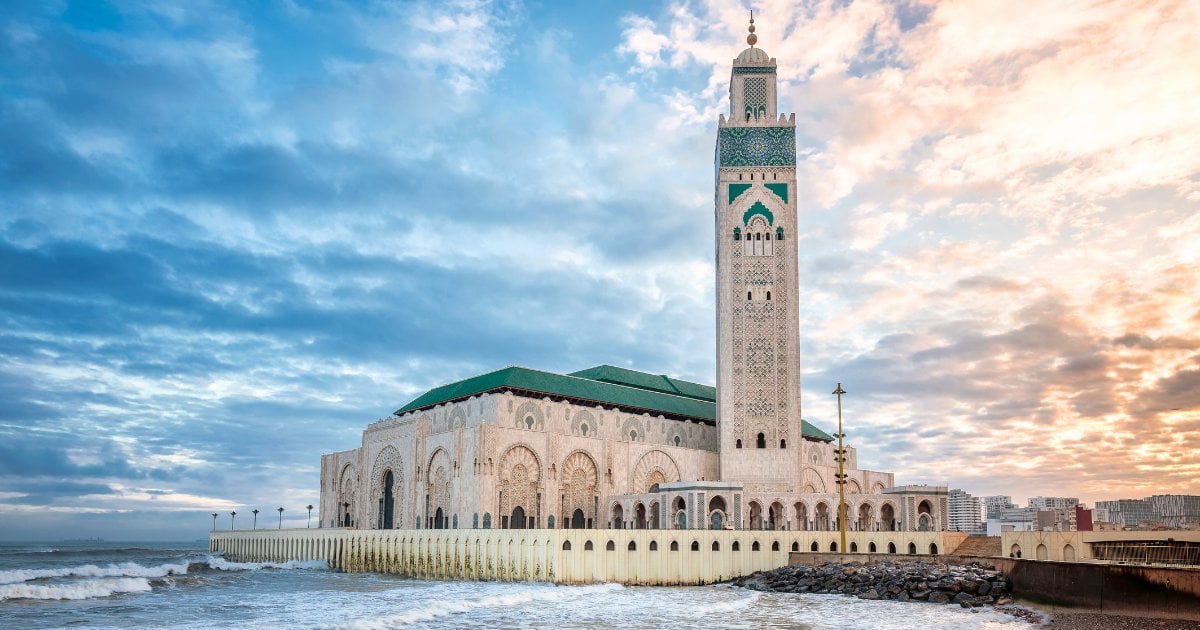
The Creation Story of Hassan II Mosque
The Hassan II Mosque is a mixture of royalty, architectural beauty, and history. The sheer scale of the project, the unity of Moroccan craftsmanship, and the decision to build on the edge of the Atlantic all speak of ambition beyond ordinary architecture.
You can feel the ambition carved into stone; every tile, arch, and carved cedar beam tells the story of a dream turned into reality.
A Royal Vision
- The Hassan II Mosque was born from the vision of King Hassan II, who wanted to gift Casablanca a monument that symbolized Morocco’s faith and craftsmanship.
- His dream was bold: to build a mosque partly over the ocean, inspired by a Quranic verse that says “God’s throne was upon the water.”
- The project was meant not only as a house of worship but also as a cultural statement, showing Morocco’s ability to blend tradition with modern engineering.
Construction Timeline (1986–1993)
- Foundation stone laid: 1986, on the late King’s 60th birthday.
- Completion: 1993, after seven years of non-stop work, including day and night shifts.
- Scale of work: More than 35,000 workers and artisans participated, many brought in from different regions of Morocco.
- The mosque’s construction required land reclamation from the Atlantic, making it one of the few mosques in the world partly built over water.
Michel Pinseau’s Design
- Designed by French architect Michel Pinseau, who had lived in Morocco and understood the country’s architectural language.
- Pinseau combined traditional Moroccan artistry with modern innovations like a retractable roof, earthquake-resistant structures, and advanced sound systems.
- His design ensured that while the mosque could host up to 105,000 worshippers (25,000 inside, 80,000 in the courtyard), it still retained the soul of Moroccan craftsmanship.
Moroccan Artisanship
- Around 6,000 Moroccan artisans worked on mosaics, marble, carved plaster, zellij tilework, and wood ceilings.
- Materials were sourced largely from within Morocco: cedar wood from the Middle Atlas, pink granite from Agadir, marble from Agadir and Tafraoute, and mosaics from Fes.
- Each element, from hand-carved cedar ceilings to intricate tile mosaics, was designed to highlight Moroccan identity.
- The only imported material? Some white granite and chandeliers, sourced from Venice and Murano glassmakers, add a European touch.
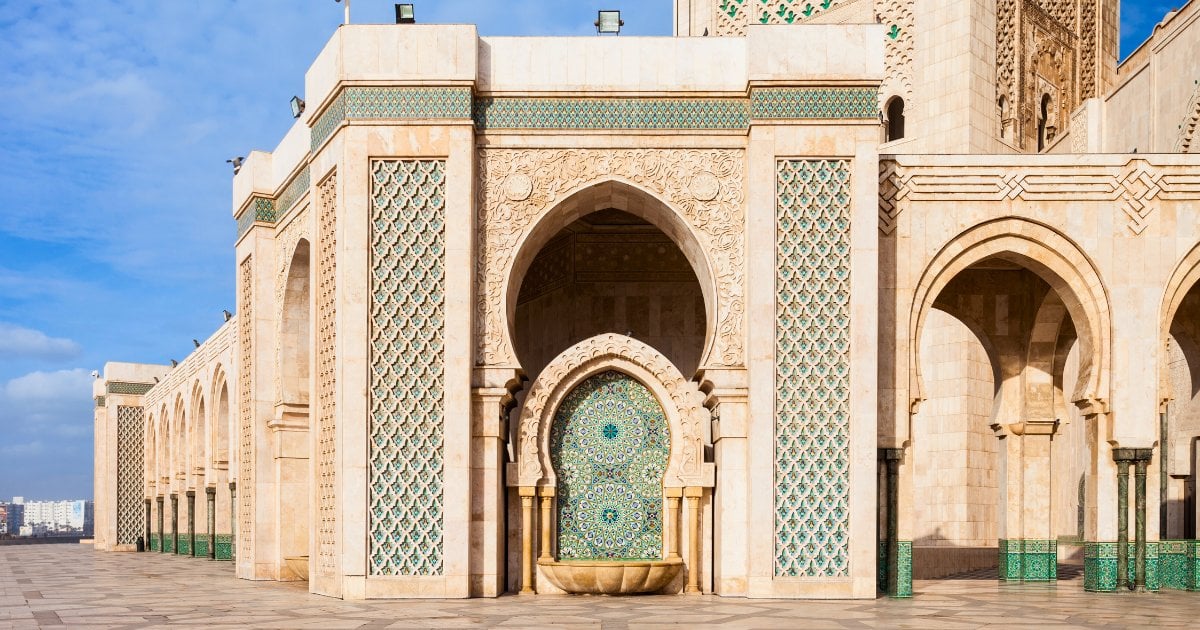
Architecture That Breathes the Ocean
The blend of sea breezes, crashing waves, and sunlight reflecting off the mosaics makes this architecture overwhelming. The building doesn’t just stand by the ocean; it feels alive because of it.
A Minaret That Touches the Sky
- The Hassan II Mosque’s minaret stands at 210 meters (689 feet), making it one of the tallest religious structures in the world.
- Its green-tiled crown is visible across Casablanca, serving as both a spiritual and architectural beacon.
- At night, the minaret glows under soft illumination, dominating the skyline like a guardian over the city.
Built Over the Atlantic
- The mosque is partly constructed on reclaimed land, extending directly over the Atlantic Ocean.
- Waves crash against its base, and on windy days, you can hear the roar of the sea beneath the prayer halls.
- This unique positioning was intentional, reflecting King Hassan II’s wish to place God’s house above the water.
A Beam Toward Mecca
- From the top of the minaret, a green laser light projects across the sky, pointing the way to Mecca, the holiest site in Islam.
- The laser is visible for several kilometers, linking the mosque to the spiritual heart of the Muslim world.
Ornate Moroccan Craftsmanship
The mosque showcases some of the finest examples of Moroccan artisanal work.
- Zellij mosaics: Geometric patterns in blues, greens, and whites cover walls and courtyards.
- Hand-carved cedar wood: Ceilings crafted with intricate floral and arabesque designs, sourced from the Middle Atlas.
- Polished marble floors: Reflecting natural light and ocean hues, creating a serene atmosphere.
- Stucco carvings: Elegant calligraphy and arabesque motifs flow across walls and arches.
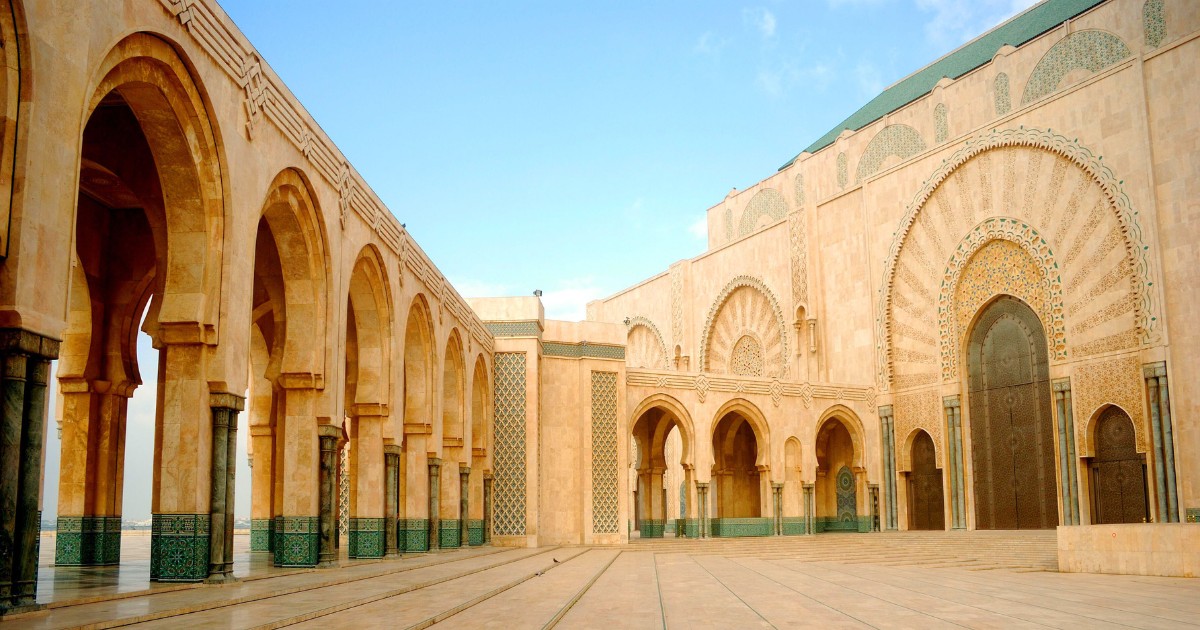
The Interior Experience in Hassan II Mosque
Stepping inside the Hassan II Mosque is a different kind of encounter with Moroccan architecture. It can accommodate 25,000 worshippers at once, making it one of the largest in the world. Non-Muslim visitors can only access the mosque through guided tours, but this ensures a structured visit where important details are explained.
Key Features Inside the Mosque
- Prayer Hall: The central hall is vast, with rows of marble columns and intricately carved woodwork. The hall’s layout reflects traditional Moroccan design, while its scale gives it a monumental feel.
- Retractable Roof: A unique engineering feature, the mosque’s roof can slide open in just a few minutes. On days when it is opened, sunlight and fresh air flood the hall, creating a direct connection between worshippers and the sky.
- Chandeliers: Several enormous chandeliers hang from the ceiling, some crafted from Venetian glass.
- Ablution Halls: Beneath the main prayer area are large ablution halls where worshippers perform ritual washing before prayers. The design here is striking, with marble fountains shaped like lotus flowers, creating symmetry and calm in an otherwise functional space.
- Women’s Prayer Area: An upper gallery is reserved for female worshippers, in line with traditional mosque layouts. Visitors can view this space as part of the guided tour.
Visitor Guidelines
- Guided Tours Only: Non-Muslims may not enter for independent exploration; guided tours are the only option. These usually last 45 minutes to 1 hour.
- Modest Dress: Visitors are required to keep their shoulders and knees covered. A scarf or shawl is recommended for women.
- Shoes: You’ll need to remove your shoes at the entrance. Bags are provided, allowing you to carry them with you.
- Photography: Photography is generally allowed inside, though visitors should avoid taking pictures during prayer times and respect the sacred environment.
A Visitor’s Guide
The Hassan II Mosque is one of the few mosques in Morocco open to non-Muslims, but entry is only possible with a ticketed guided tour. Knowing how and where to purchase tickets, the schedule of tours, and the best times to visit can make your experience smoother.
Tickets: How and Where to Buy?
- On-site: Tickets are sold at the mosque’s ticket office, located near the main entrance. Payment is usually accepted in Moroccan dirhams.
- Official Website: Tickets can be reserved through the Hassan II Mosque Foundation website.
- Tour Platforms: Options are also available through platforms such as Morocco Tours Agency, often bundled with guided city tours in Morocco.
Pricing, Opening Hours, and Tours
- Price: General admission is typically 130 MAD (around 13 USD) for adults. Reduced prices apply for children, while infants under a certain age may enter for free.
- Opening Hours: Tours usually run multiple times daily, with schedules adjusted around prayer times. Common morning tours begin at 9:00 AM, 10:00 AM, 11:00 AM, and 12:00 PM, with one or two afternoon slots, though hours vary on Fridays and during religious events.
- Tour Languages: Guided tours are available in several languages, most commonly English, French, Spanish, and Arabic.

Best Visiting Times for Hassan II Mosque
- Early Morning: The first tours of the day are generally the calmest, with fewer crowds and soft light streaming through the mosque’s stained glass.
- Late Afternoon: Another recommended time is just before sunset, when the marble courtyard reflects golden light from the ocean. Photography is particularly rewarding during these hours.
- Avoid Midday: Between 12 PM and 2 PM, the mosque can become busy, and the sun is at its harshest, making outdoor exploration less comfortable.
Visiting Tips
- Arrive at least 15–20 minutes before your tour to purchase tickets and pass security checks.
- Modest dress is required; carrying a scarf or shawl is useful.
- Plan for about 45 minutes to 1 hour for the guided tour, and additional time if you want to walk the esplanade or explore the museum.
Beyond the Mosque
The Hassan II Mosque is more than a place of worship; it anchors a broader cultural complex and a coastal setting that allows visitors to extend their time beyond the prayer hall itself.
- Museum & Library: Within the mosque’s grounds, the museum exhibits traditional Moroccan craftsmanship: zellij tilework, calligraphy, and carved stucco panels, alongside explanations of how artisans worked on the mosque’s construction. The adjoining library offers a collection of religious and historical texts, providing insight into Islamic scholarship.
- Madrasa: The madrasa (religious school) linked to the complex reflects Morocco’s long-standing tradition of combining learning with faith. Visitors can see classrooms and courtyards where students study Quranic interpretation and the Arabic language.
- Corniche Walk: Just outside, the Casablanca Corniche stretches along the Atlantic. From here, the mosque’s minaret towers over the water while fishing boats and cargo ships trace the horizon.
- Local Cafes and Restaurants: Along the corniche, cafes and seafood restaurants provide a chance to pause. Many offer terrace seating where visitors can reflect on the mosque visit while sampling Moroccan mint tea or grilled catch of the day.
Visiting Tip: Plan for at least half a day if you want to explore both the mosque and its surroundings.
Travel Essentials That Make the Visit Easier
Exploring the Hassan II Mosque and its surrounding sites becomes much smoother with a few thoughtful items on hand. These essentials not only help you respect local customs but also make the experience more comfortable and practical.
- Lightweight Scarf or Shawl: A versatile piece that allows visitors to follow the mosque’s modest dress code. It can also double as light sun protection when walking along the corniche.
- Slip-On Shoes: Since footwear must be removed before entering prayer areas, easy-to-remove shoes save time and effort. They are particularly helpful when moving between different sections of the mosque or nearby madrasa.
- Portable Charger: With a full day of exploring, between guided tours, photo stops, and cafe breaks, a power bank ensures your phone or camera stays charged throughout.
- Compact Camera or Smartphone Gimbal: The mosque’s scale and the open ocean backdrop are best captured with steady shots. A small camera or gimbal keeps equipment manageable while still producing quality images.
Visiting Tip: Pack these items in a lightweight day bag so you can move comfortably without carrying too much.
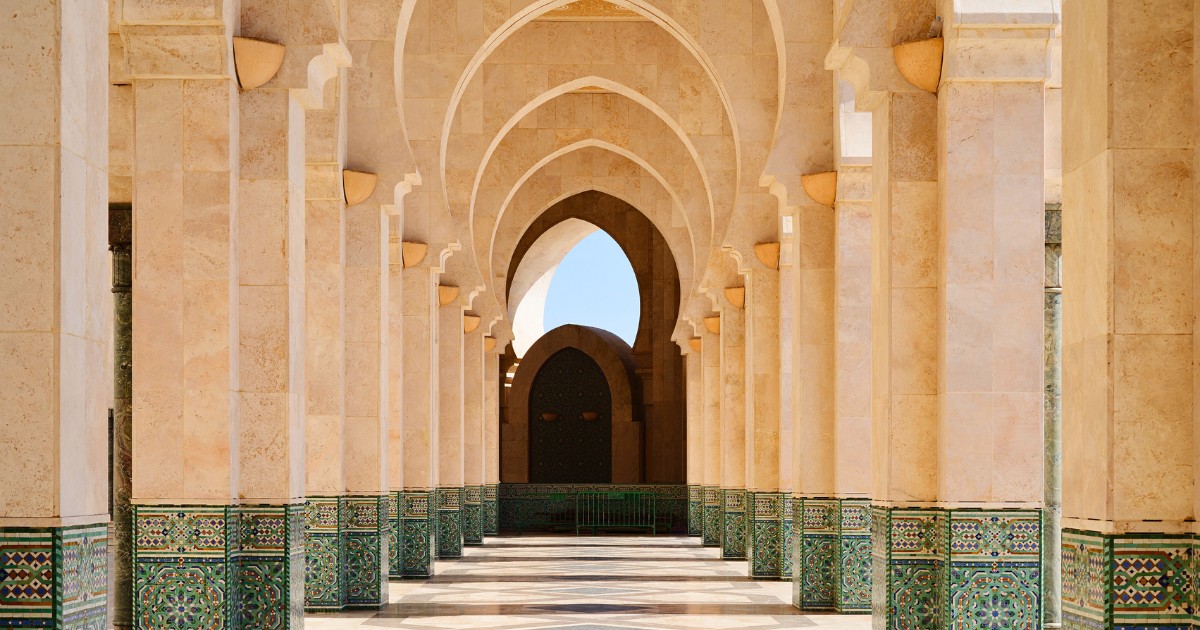
Hassan II Mosque: More Than a Monument
The Hassan II Mosque is more than a building. It’s Morocco’s dialogue with the ocean, a masterpiece of architecture, and a place that holds the heartbeat of Casablanca. Standing on the esplanade, you will realize it isn’t just something you see; it is something you feel.
If you’re visiting Casablanca, plan ahead, get your Hassan II Mosque tickets, and take time to truly experience it. Walk the halls, admire the ocean views, and let the artistry sink in.
Frequently Asked Questions
Do you need tickets to enter the mosque?
Yes, non-Muslim visitors need a ticket to enter the Hassan II Mosque, as entry is only possible through official guided tours. Muslims, however, do not require a ticket and may enter freely during prayer times to worship. Tickets can be purchased at the mosque entrance or through authorized platforms, and the fees support the maintenance of this landmark.
Can non-Muslims go inside?
Unlike most mosques in Morocco, which are closed to non-Muslims, the Hassan II Mosque is one of the few exceptions. Visitors of all faiths are welcome, but entry is only allowed as part of an official guided tour to ensure proper respect for the sacred space.
How long does a visit usually take?
A guided tour usually lasts between 45 minutes and one hour. This is enough time to admire the vast prayer hall, intricate tilework, marble columns, and learn about the mosque’s architecture and history from the guide.
Is photography allowed?
Yes, photography is permitted throughout the mosque, and many visitors take advantage of the chance to capture its stunning interiors. However, it’s advised to be respectful, avoid flash, and refrain from taking intrusive photos of people in prayer.
What’s the best time of day for photos?
Morning hours provide soft light that highlights the interior’s detailed craftsmanship, while late afternoon creates dramatic shadows and colors along the oceanfront. Sunset is particularly popular, as the mosque’s minaret and exterior glow beautifully against the Atlantic backdrop.